What Standard Bloodwork Misses and why comprehensive blood testing finds risk years earlier
Your annual physical can come back "all normal" while the early signs of heart disease, diabetes, and inflammation sit quietly in markers your doctor never ordered. Here is what gets skipped, and why it matters.

A basic panel answers a handful of questions. A comprehensive panel asks dozens more, and catches risk while it is still reversible.
- A standard annual panel checks blood cells, kidney and liver function, basic cholesterol, glucose, and one thyroid number.
- Comprehensive blood testing adds ApoB, Lp(a), fasting insulin, hs-CRP, a full thyroid panel, and nutrient status.
- A lab reference range describes the middle of a general population, not an optimal range for long-term health.
- Reading labs well means watching patterns and trends over time, not one number in isolation.
You fast overnight, roll up your sleeve, and a week later the message lands: everything looks normal. It is a relief, and often incomplete, because the standard annual panel was built to catch disease that has already crossed a line. Heart disease, diabetes, and chronic inflammation build for years before they trip it.
What a Standard Annual Panel Actually Includes
A typical physical orders a complete blood count, a metabolic panel, a basic lipid panel, a fasting glucose, and a single TSH. This is good medicine, and it reliably catches anemia, kidney failure, liver injury, high cholesterol, and frank diabetes.
The same design that makes it efficient leaves predictable blind spots. The lipid panel measures how much cholesterol your particles carry rather than how many particles you have, a normal fasting glucose can hide insulin resistance, and one TSH can read fine while autoimmune thyroid disease smolders.
A standard panel tells you whether disease has arrived. A comprehensive panel tells you which direction you are heading, while you still have time to change course.
The core distinction in longevity-oriented lab work
The Markers Comprehensive Blood Testing Adds
- ApoB. Every plaque-driving particle carries exactly one ApoB protein, so it counts particles rather than cargo.
- Lp(a). A largely genetic, lifelong risk factor for heart attack and stroke that a standard lipid panel misses entirely.
- Fasting insulin and HOMA-IR. Insulin climbs for years before glucose does, so this catches insulin resistance early.
- hs-CRP. A sensitive marker of low-grade, body-wide inflammation that stratifies cardiovascular risk.
- Homocysteine. Tied to vascular damage and to how well your body methylates.
- Full thyroid panel. Free T3, free T4, and antibodies alongside TSH, since TSH alone is only a pituitary signal.
- Ferritin and iron studies. Detects both deficiency and overload, often long before symptoms.
- Vitamin D, B12, and folate. Common insufficiencies tied to bone, immune, metabolic, and cognitive health.
- Sex hormones and DHEA-S. Testosterone, estradiol, and DHEA-S track endocrine aging.
- GGT and uric acid. Early signals of liver stress, oxidative load, and metabolic strain.
Why "Normal" Is Not the Same as "Optimal"
A lab reference range is not a health target. It is the middle 95 percent of values from the population that walks into the lab, a population already carrying a lot of cardiometabolic risk.
Risk runs on a gradient, and much of it lives inside the normal band. An HbA1c of 6.0 percent sits below the diabetes cutoff yet carries higher cardiovascular risk, and an hs-CRP above 1 mg/L marks rising inflammation well inside the range. The number passed, the pattern did not.
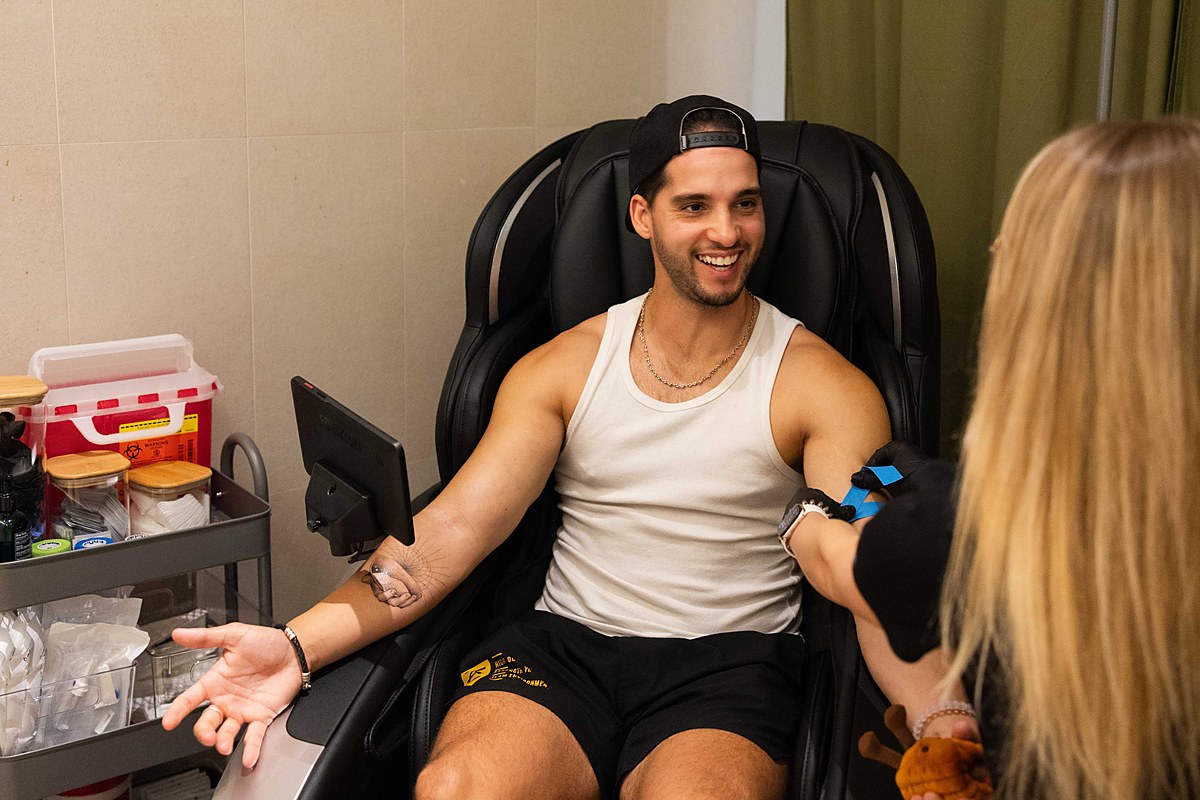
The bottom line: a clean standard panel is good news, but it is not a clean bill of long-term health. Comprehensive blood testing in West Hollywood reads the markers a routine physical skips and judges them against optimal targets.
How to Read Your Own Labs
- Get the actual numbers. Ask for values and units, not a portal summary that only says normal.
- Watch the trend. One result is a dot, three across three years is a direction.
- Read markers in groups. Homocysteine, B12, and folate move together, as do ApoB, Lp(a), and hs-CRP.
- Know what to ask for. If your physical covered only a CBC, CMP, lipids, glucose, and TSH, the markers above were never ordered.
- Interpret with a clinician. More data helps only when someone separates a meaningful trend from noise.
- Sniderman AD, et al. Circulation: Cardiovascular Quality and Outcomes, 2011. A meta-analysis finding ApoB a stronger predictor of cardiovascular risk than non-HDL cholesterol or LDL cholesterol. ahajournals.org
- American Heart Association. Apolipoprotein B (ApoB). Explains why ApoB counts atherogenic particle number rather than cholesterol mass. heart.org
- ACC/AHA. Updated Guideline for the Management of Blood Cholesterol, 2026. Supports selective use of ApoB and Lp(a) to refine atherosclerotic cardiovascular risk. acc.org
- Ridker PM, et al. Circulation, 2004. hs-CRP stratifies cardiovascular risk and identifies residual risk beyond LDL cholesterol. ahajournals.org
- Tahapary DL, et al. PMC (NCBI), 2022. Fasting insulin and HOMA-IR detect insulin resistance that predicts diabetes and cardiovascular outcomes before glucose rises. ncbi.nlm.nih.gov
- Demetriou EA, et al. JAMA Internal Medicine, 2025. On iron deficiency thresholds and why lower ferritin cutoffs identify clinically relevant deficiency. jamanetwork.com