How Hyperbaric Oxygen Therapy Works Inside the Body and what the evidence actually supports
Pressurize a room, hand someone pure oxygen, and the rules of how the body carries it quietly change. Here is the real mechanism, separated from the marketing.
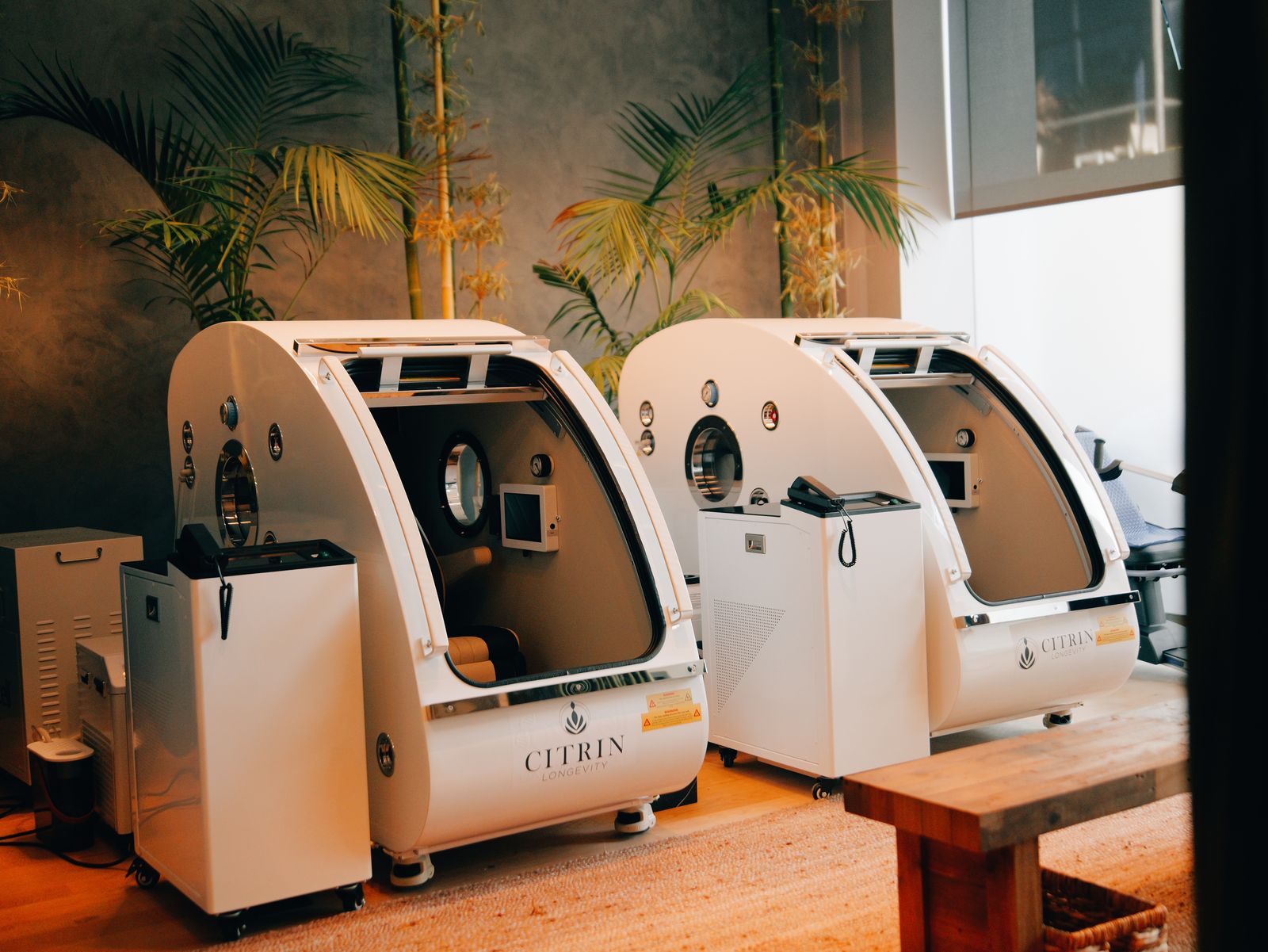
Clinical hyperbaric chambers deliver 100% oxygen at pressures of roughly 2 to 3 times sea level, the range where most of the documented benefits appear.
- Hyperbaric oxygen works by pressure, not more breaths. Under pressure, oxygen dissolves directly into plasma and reaches tissue circulation cannot.
- That flood sets off real biology: new blood vessel growth, calmer inflammation, and repair cells released from bone marrow.
- The strongest evidence sits with defined conditions, including non-healing wounds, radiation injury, and carbon monoxide poisoning.
- Pressure has rules. Real risks run from ear barotrauma to oxygen toxicity, which is why protocols and screening matter.
You cannot breathe your way to more oxygen, because hemoglobin is already almost full at rest. Hyperbaric oxygen therapy exists to get around that limit. Seal a person inside a pressurized chamber on 100% oxygen and oxygen stops waiting for a ride on hemoglobin, dissolving straight into the watery part of the blood.
The physics: why pressure changes everything
Henry's law says the amount of a gas that dissolves into a liquid rises with the pressure above it, which is why an opened soda fizzes. Your bloodstream behaves the same way, so raising oxygen pressure dissolves more into your plasma.
Breathing ordinary air at sea level, plasma carries only about 0.3 milliliters of dissolved oxygen per 100 milliliters of blood. At 2 atmospheres on pure oxygen that rises to roughly 4 to 5 milliliters, enough for plasma alone to meet many tissues' needs.
The pressure level matters, and this is where marketing gets slippery. Therapeutic protocols run between about 1.9 and 3.0 atmospheres, and the UHMS states plainly that mild hyperbaric oxygen below 1.5 atmospheres is unproven.
Under hyperbaric conditions, enough oxygen can be dissolved in the plasma to keep tissue alive even when hemoglobin is unavailable. That is why it works for carbon monoxide poisoning, where hemoglobin is effectively blocked.
Undersea and Hyperbaric Medical Society, HBO Indications
What hyperbaric oxygen actually does to your cells
Dissolved oxygen does not need a red blood cell to reach a cell, it diffuses. In a swollen wound where capillaries sit too far from the cells that need them, the gradient created by pressure pushes oxygen across the gap.
There is a deeper twist researchers call the hyperoxic-hypoxic paradox. When tissue cycles between high and normal oxygen, the drop afterward registers in cell signaling almost as if hypoxia had occurred, so the body runs the same repair programs without ever starving the tissue.
The repair-cell and telomere research
Stephen Thom and colleagues found a single two-hour session at 2.0 atmospheres roughly doubled circulating CD34+ stem cells, rising about eightfold over 20 treatments. In mice the effect vanished without a nitric oxide enzyme.
In 2020, Shai Efrati's group published results on 35 healthy adults aged 64 and older across 60 sessions in three months. Telomeres lengthened by more than 20% in several immune cell types, and senescent cells fell by roughly 10% to 37%.
Read it carefully: the telomere study enrolled only 35 people with no sham control, and measured markers in blood rather than lifespan. It is a signal worth taking seriously, not proof that hyperbaric oxygen reverses aging.
Pressure is the variable that decides whether hyperbaric oxygen is medicine or marketing. Genuine protocols run near 2.0 atmospheres, which is what the chambers at Citrin Longevity in West Hollywood are built for.
Where the evidence is strong, and where it is hype
On the solid side sits a defined list the UHMS recognizes as standard of care, including non-healing wounds, decompression sickness, carbon monoxide poisoning, and crush injuries. A meta-analysis of 14 trials found it improved diabetic foot ulcer healing and lowered amputation rates.
On the other side sit the uses that fill social media. Anti-aging, autism, routine athletic recovery, and general wellness exposures are not endorsed, because the trials are small, mixed, or barely exist. The loudest claims tend to come from the lowest pressures.
The risks pressure brings
The most common risk is barotrauma, since the air spaces in your ears and sinuses have to equalize as pressure changes. It is usually preventable with the same techniques divers use.
Oxygen itself becomes toxic in high enough doses, which is why protocols build in air breaks. There is one absolute contraindication, an untreated pneumothorax, and because pure oxygen feeds fire the chamber has strict rules.
- Hajhosseini B, Kuehlmann BA, Bonham CA, et al. StatPearls (NCBI Bookshelf), 2024. Reviews the physics of HBOT, including Henry's law, dissolved plasma oxygen, and oxygen toxicity. ncbi.nlm.nih.gov
- Undersea and Hyperbaric Medical Society. UHMS Hyperbaric Oxygen Therapy Indications, 2020. Defines approved indications, states that HBOT increases total blood oxygen content by roughly 125% at 2 ATA, and classifies mild (under 1.5 ATA) HBOT as unproven. uhms.org
- Thom SR, Bhopale VM, Velazquez OC, et al. American Journal of Physiology – Heart and Circulatory Physiology, 2006. HBOT doubled circulating CD34+ stem/progenitor cells after one session and increased them eightfold over 20 treatments via a nitric oxide–dependent pathway. pubmed.ncbi.nlm.nih.gov
- Hachmo Y, Hadanny A, Efrati S, et al. Aging (Aging-US), 2020. In 35 adults aged 64+, 60 HBOT sessions lengthened immune-cell telomeres by over 20% and reduced senescent cells by roughly 10–37%. aging-us.com
- Sharma R, Sharma SK, et al. Diabetology & Metabolic Syndrome / systematic review, 2022. Meta-analysis of 14 randomized trials found adjunctive HBOT improved diabetic foot ulcer healing and reduced amputation rates. pmc.ncbi.nlm.nih.gov
- U.S. Food and Drug Administration. FDA Letter to Health Care Providers: Safe Use of Hyperbaric Oxygen Therapy Devices, 2021. Defines HBOT and warns of risks from non-approved and mild uses, including fire hazard. fda.gov