VASPER Training, Explained: How 21 Minutes Does the Work of Two Hours Compression and cold turn a gentle session into a serious metabolic event.
VASPER training stacks three well-studied levers, blood flow restriction, cooling, and short high-intensity intervals, onto one low-impact machine. Here is what the science actually supports, and where the marketing runs ahead of the evidence.
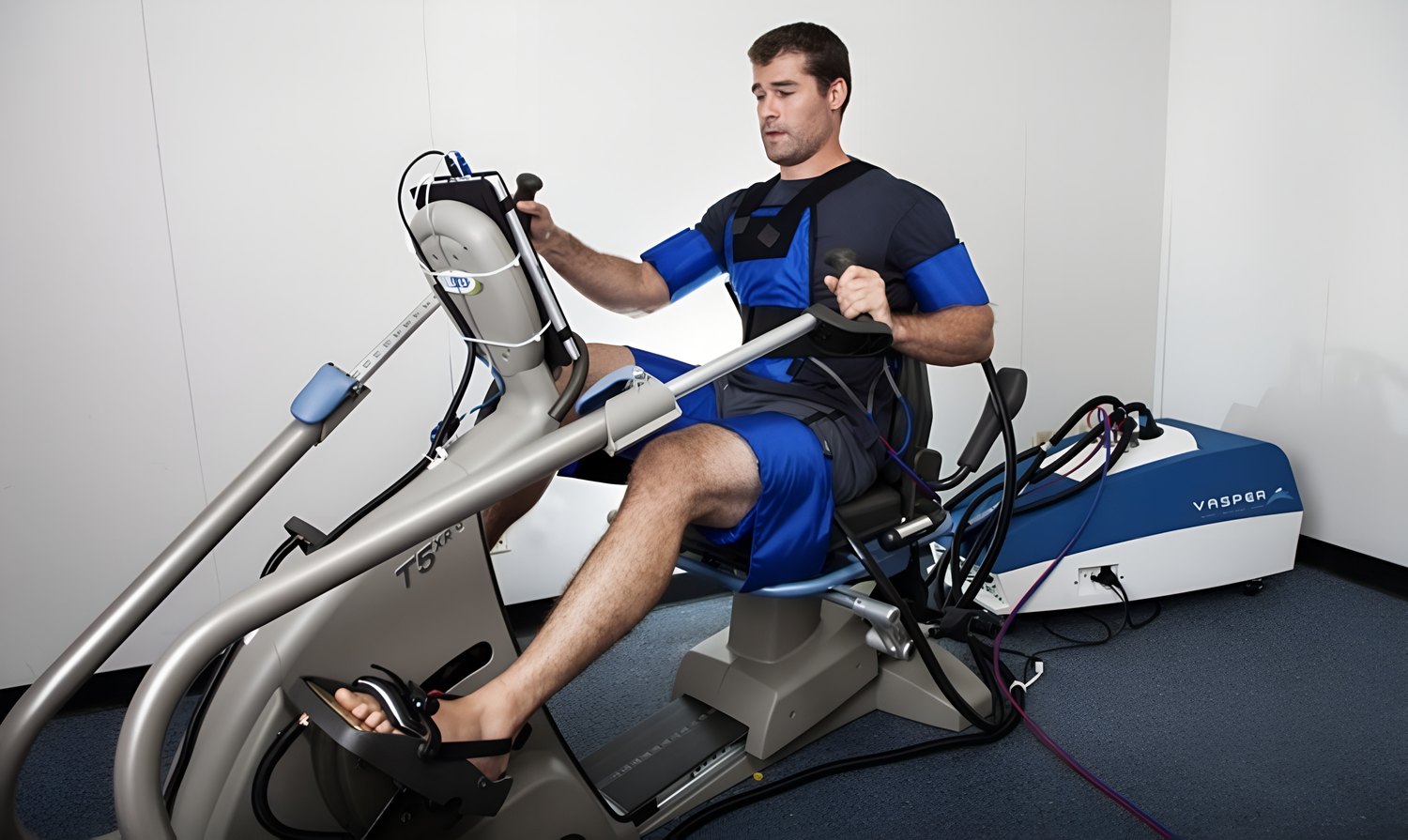
A VASPER session looks calm from the outside. Inside the muscle, compression and cold are doing the heavy lifting.
- VASPER training combines three separate, well-studied tools: blood flow restriction, body cooling, and short high-intensity intervals on a low-impact recumbent machine.
- Each tool is supported by solid research on its own. Compression can build strength at light loads, intervals raise fitness in minutes, and cooling can extend output and comfort.
- The big hormonal swing is real physiology. Exercise above the lactate threshold reliably raises growth hormone, and restriction amplifies that signal at lighter loads.
- The headline claims, "21 minutes equals two hours," are extrapolations. VASPER-specific clinical data is thin, so the honest read is mechanism-strong, trial-light.
The machine looks almost too easy: you recline, cuffs wrap your thighs and arms, cooled pads press your skin, and you pedal for twenty-one minutes. Then you stand up and your legs feel like you finished something much longer. That gap is the whole idea behind VASPER training.
What VASPER Training Actually Is
VASPER is three known tools bolted together. Compression cuffs apply blood flow restriction to the working limbs while a liquid cooling system chills the body. The workout itself is interval training, done reclined so the joints take very little load.
The device traces back to Peter Wasowski, a vascular technology developer who has spoken for NASA on vascular performance. Space agencies learned that short, intense exercise preserves muscle better than long easy sessions, and VASPER borrows that principle.
Why Compression Does So Much at Such Light Loads
Blood flow restriction means cuffs are inflated to partly limit blood entering the limb and largely block blood leaving it. The result is a muscle working in a low-oxygen, metabolite-rich pocket, the same chemical environment heavy lifting creates, produced with almost no weight.
Muscle responds to metabolic stress as well as heavy loads. A meta-analysis of nine studies in over 200 athletes found moderate to large strength gains from restriction training.
There is a limit. One study found light-load restriction raised metabolic stress above light exercise alone but did not match true heavy lifting. Restriction is powerful, but not a complete substitute for load.
Summarized from blood flow restriction research, Patterson et al. and meta-analytic reviews
The Hormone Story: Where the HGH Claim Comes From
Growth hormone release tracks exercise intensity. A landmark review concluded the body releases the most growth hormone when exercise sits at or above the lactate threshold for ten minutes or more, and lactate itself appears to be one of the triggers.
Intervals push you above that threshold in waves while restriction floods the muscle with lactate at lighter loads. Growth hormone peaks around twenty minutes after exercise, which puts a twenty-one-minute session inside the window. No head-to-head trial has measured that swing yet.
The Cooling Piece: Comfort, Output, and a Caveat
Heat is a brake on performance, because as core temperature rises your brain dials down muscle drive. A meta-analysis of fifteen studies found pre-cooling improved endurance, with larger cooled areas working best.
VASPER chills broad surfaces, the thighs, torso, and feet, which is closer to the large-area cooling that works. A double-blind trial of palm cooling during heavy bench press found no benefit, so where VASPER lands on that spectrum is unsettled.
Why Short Intervals Can Rival Long Cardio
The reason is dose, not duration. Brief efforts near your ceiling drive the heart to pump harder and the muscle to build more mitochondria, the same adaptations long slow cardio chases, reached faster.
Where the equivalence breaks down is the long game. Lasting gains come from weeks and months of repeated sessions, and no study shows one VASPER session matching two hours of training across every outcome over time.
Mechanism-Strong, Trial-Light: The Honest Verdict
The VASPER-specific evidence is thin. One small peer-reviewed study in thirty untrained people found that adding occlusion and cooling to intervals shifted blood markers more than intervals alone, and the company's own pilot data has not passed peer review.
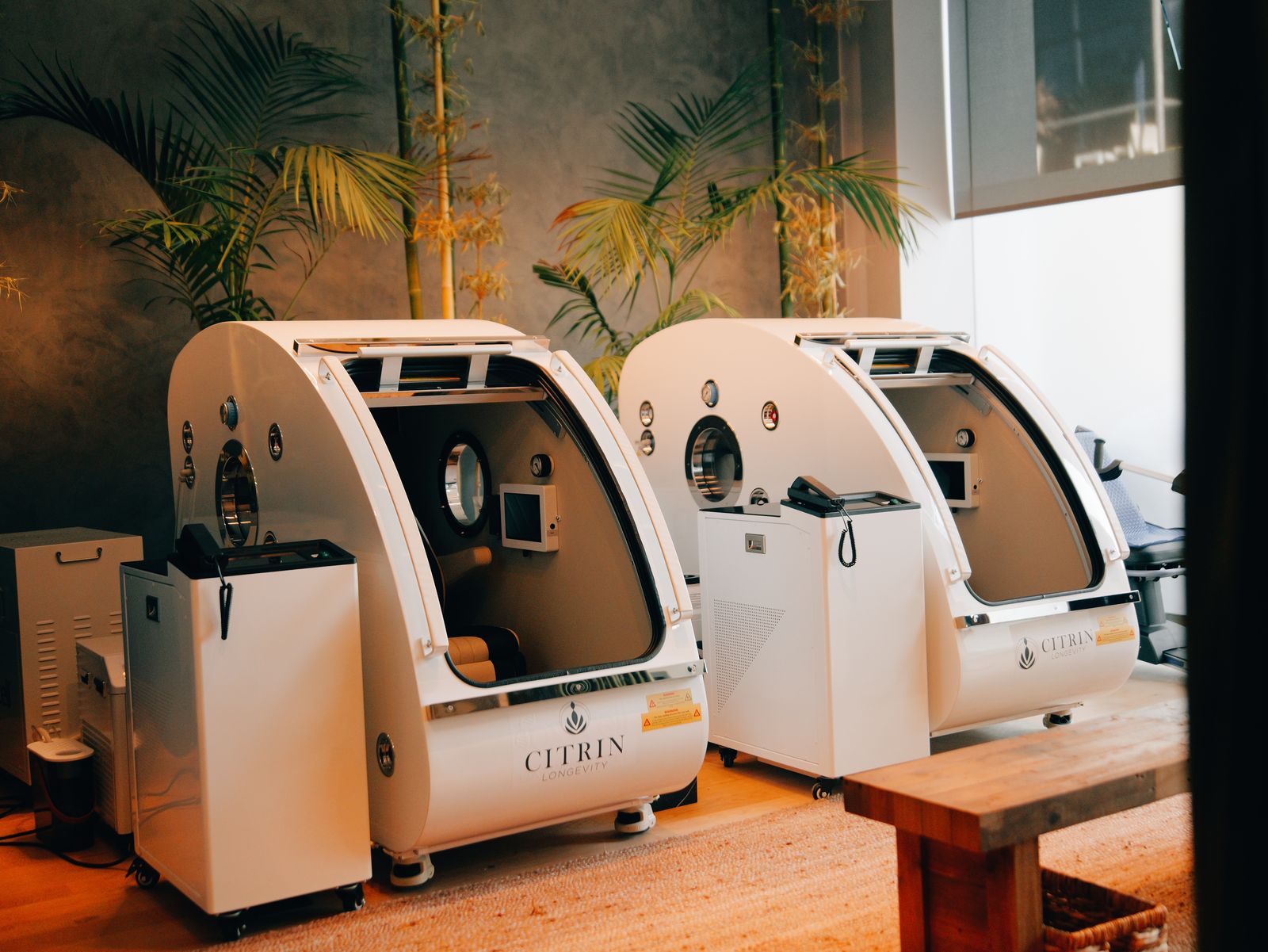
The bottom line: VASPER training is built on real, well-documented physiology, and restriction, cooling, and intervals each earn their place. The mechanisms are strong and the joint-sparing design is genuinely useful, but the grand equivalence claims are extrapolations waiting on better trials. VASPER training is available at Citrin Longevity in West Hollywood, Los Angeles.
- Bacon AP, Carter RE, Ogle EA, Joyner MJ. PLoS ONE, 2013. Interval training raised maximal oxygen uptake by roughly 0.51 L/min, slightly more than continuous training, often in short programs. Link
- Godfrey RJ, Madgwick Z, Whyte GP. Sports Medicine, 2003. Growth hormone release peaks when exercise meets or exceeds the lactate threshold for at least ten minutes; lactate is a key trigger. Link
- Lower-extremity blood flow restriction meta-analysis (9 studies, 224 athletes). PMC. BFR training produced moderate to large strength gains, with effect sizes from about 0.88 to 1.47. Link
- Suga T, et al. Journal of Applied Physiology, 2009. Muscle spectroscopy showed low-load BFR raised metabolic stress above light exercise but did not fully match heavy loading. Link
- Pre-cooling and endurance meta-analysis (15 studies). PMC, 2024. Pre-cooling improved time-trial performance and time to exhaustion, with external large-area cooling most effective. Link
- Interval training with occlusion and cooling on the VASPER system (30 untrained participants). PMC, 2023. Adding occlusion and cooling shifted coagulation and oxidative-stress markers more than intervals alone. Link