Most clinics hand you a number and a vial. Dr. Haley Moran starts with a harder question: why did your testosterone fall in the first place? For men across West Hollywood and Los Angeles, the answer often changes the whole protocol, and keeps you off lifelong injections far longer than you expected.
Schedule a Tour
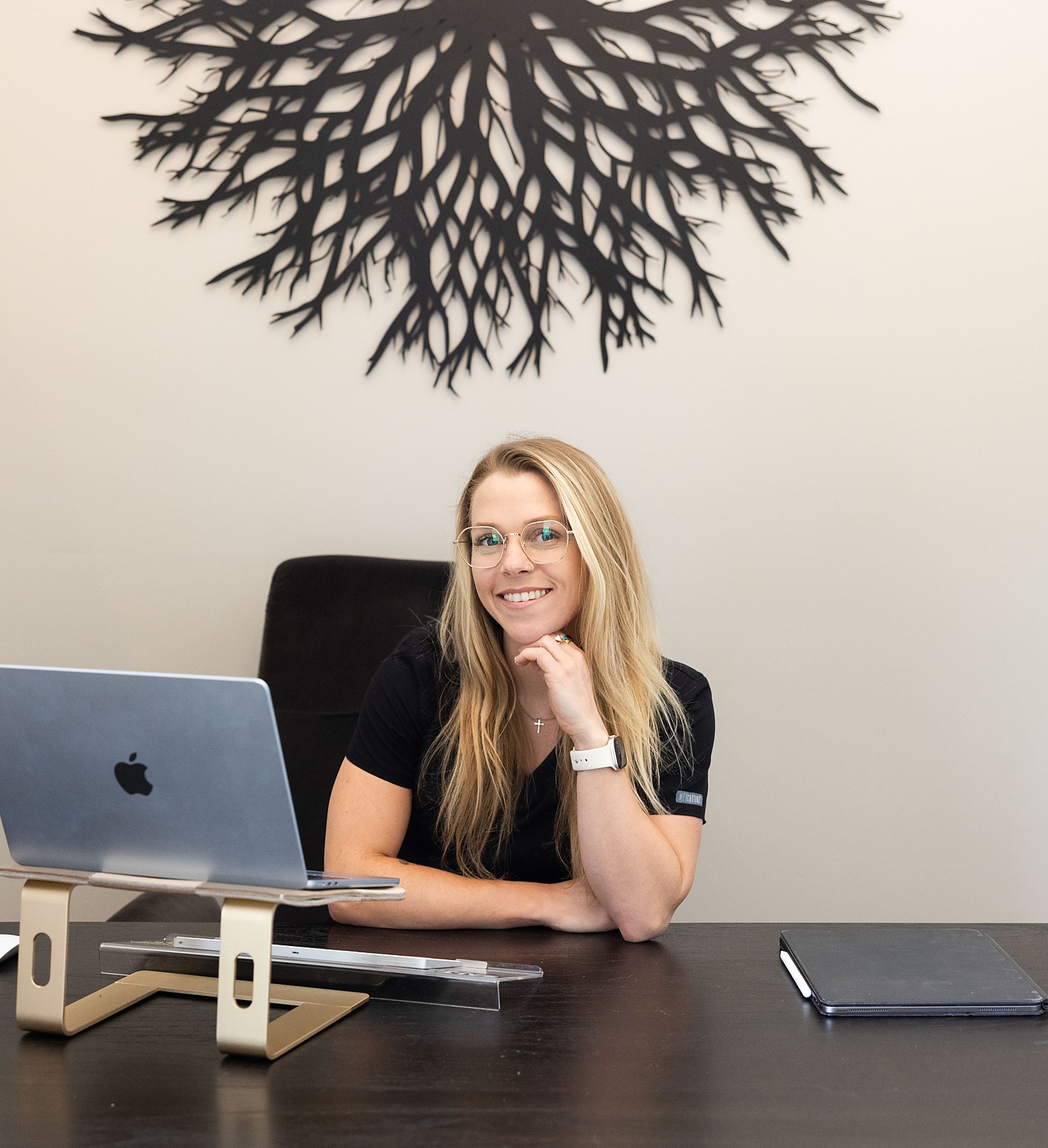
Testosterone falls for reasons. Poor sleep. Chronic stress and high cortisol. Gut dysfunction. Nutrient depletion. Extra body fat that converts testosterone into estrogen. Each cause has a different fix. Replacing the hormone without finding the cause treats the gauge, not the engine.
Dr. Haley Moran leads the testosterone program at Citrin Longevity, and her first move is rarely a vial. Where your own production can be restarted, she uses Clomid or enclomiphene to wake the pituitary signal instead of overriding it. Standard injections suppress fertility, and her approach is built to protect it.
A serum testosterone result is one snapshot of total hormone in the blood. It does not show how much is actually available to your tissues, how much is converting into the active metabolite that powers energy, drive, and recovery, or how much is turning into estrogen instead.
The DUTCH test reads how your body processes hormones, not just how much it makes, mapping more than 35 metabolites. Two men with the same serum number can look completely different underneath. One converts toward the active 5-alpha pathway, another toward the weaker 5-beta pathway or runs estrogen high.
Dr. Moran reads those patterns against your full panel inside our biometric platform, then tracks every change over time. The precision of what we find sets the precision of what we treat.

After 30, untreated testosterone slips about one percent a year. A doctor-led protocol aims to hold you in the optimal range instead. Where you land depends on the testing, the cause, and the plan.
Illustrative trajectories for total testosterone, not population averages or a guarantee. Individual results vary, and a single number is not a diagnosis. We read your own labs and metabolite profile, then set your target with your doctor.
Women make testosterone too, in the ovaries and adrenal glands, and levels fall through perimenopause and menopause. Low testosterone in women shows up as fatigue, low libido, brain fog, mood swings, and workouts that stop paying off.
Dr. Moran built her clinical focus around women's hormones. She assesses testosterone as part of a full female panel and treats it with low, bioidentical doses, often alongside bioidentical estrogen and progesterone (BHRT) for women in perimenopause and menopause. The same DUTCH metabolite analysis guides every dose.
"I do not chase one number for every man. I read where your energy, recovery, and metabolites line up, then we set a target your body can actually hold. Optimal is the level where you function like yourself again, confirmed by the labs."
Dr. Haley Moran, ND. Clinical Director, Citrin Longevity. Targets are individual, set from your metabolite profile and symptoms, not population averages.
Every step is sequenced. Root cause first, replacement only when it is the right tool. Monitoring the whole way.
Dr. Moran takes a complete history and lifestyle review, then orders a deep blood panel and the DUTCH test: total and free testosterone, metabolite pathways, LH and FSH, estrogen, thyroid, and adrenal function. The full picture comes before any recommendation.
Your results are read against your full hormonal and metabolic profile in our biometric platform. Dr. Moran identifies the real driver, whether that is sleep, cortisol, gut function, body composition, or true testicular decline, and designs around it. The protocol addresses the driver, not just the output.
When your own production can be restarted, Clomid or enclomiphene is used to stimulate the pituitary axis. This protects fertility, keeps your own system working, and avoids lifelong dependence on injections. Most men notice measurable change within 6 to 8 weeks.
Will TRT affect my fertility?
Standard testosterone injections suppress LH and FSH, the pituitary signals that drive sperm production. For men who want to keep their fertility, Dr. Moran uses Clomid or enclomiphene to stimulate your own production instead. Fertility is part of the first intake conversation, not an afterthought.
What is the difference between total and free testosterone?
Most testosterone in your blood is bound to proteins, mainly SHBG, and is unavailable to your tissues. Free testosterone is the unbound fraction that actually enters cells and drives energy, libido, muscle, and focus. A man can have adequate total testosterone and very low free testosterone, which is why symptoms persist, so we measure both.
How is this different from other TRT clinics in Los Angeles?
Most clinics across Los Angeles and West Hollywood work from a single testosterone number and go straight to injections. We start with the cause. Dr. Moran reads your metabolites with the DUTCH test, protects fertility where it matters, and keeps your protocol inside a full longevity program.
Is testosterone therapy safe, and what do you monitor?
Handled carefully, hormone therapy is well established, and we treat it as real medicine with real follow-up. Alongside your hormones we watch hematocrit, estrogen, PSA where appropriate, blood pressure, and metabolic markers, adjusting as your labs change. We would rather restart your own production than keep you on a therapy you do not need.
Do you treat women with testosterone?
Yes. Women produce testosterone in the ovaries and adrenal glands, and low levels are linked to fatigue, low libido, mood changes, and poor exercise response. Dr. Moran assesses it inside a full female hormone panel and treats it with much lower bioidentical doses, often alongside estrogen and progesterone in perimenopause and menopause.
How long does it take to feel a difference?
With Clomid or enclomiphene, most men notice energy and mood changes within 4 to 6 weeks as their own production rises. With direct replacement, energy and focus often shift within 2 to 3 weeks. Body composition usually takes 8 to 16 weeks, and the 12-week retest documents what the data shows.
Injections, cream, gel, or pellets: which form is best?
There is no single best form. Injections are precise and easy to adjust, daily cream runs steadier but can transfer through skin contact, and pellets last months but cannot be dialed back. Dr. Moran matches the method to your labs, your goals, and your life, then adjusts as your metabolite profile changes.
What is the difference between enclomiphene and Clomid?
Both are pills that signal your pituitary to make more of your own testosterone rather than replacing it from outside. Clomid is a mix of two isomers, and the extra one can raise estrogen and affect mood in some men. Enclomiphene is the cleaner single isomer, and Dr. Moran chooses between them based on your DUTCH results.
Do I need hCG on testosterone therapy?
Standard testosterone shuts down the signal that keeps your testicles active, which can shrink them and lower sperm count. hCG mimics that signal and keeps them working, which is why it is often added for men preserving fertility or testicular size. Dr. Moran decides based on your goals, your labs, and whether a stimulation-first approach fits better.
Will I need an estrogen blocker like anastrozole?
Not by default. Some testosterone converts to estradiol, and men need a healthy amount for libido, mood, joints, and bone, so pushing it too low can make you feel worse. Dr. Moran manages estradiol through dose and frequency first, considering anastrozole only when the data and symptoms call for it.
Does TRT cause thick blood, and will I have to donate blood?
Testosterone can raise hematocrit, the share of red cells in your blood, which is why we watch it on every panel. The fix is usually a dose or frequency adjustment, better hydration, or addressing sleep apnea. If it climbs too high, periodic blood donation brings it down.
Does testosterone therapy raise PSA or prostate cancer risk?
Testosterone can stimulate the prostate, which may nudge PSA up or affect urinary flow, so we screen first and track PSA where appropriate. Current evidence has not shown that well-monitored therapy causes prostate cancer in men without it. Dr. Moran reviews your prostate history before you start and coordinates with a urologist when your numbers or symptoms warrant it.
Will TRT make me lose my hair?
Testosterone can convert to DHT, the hormone tied to male pattern hair loss, so therapy may speed up thinning in men already prone to it. The DUTCH test shows how strongly you convert down that pathway, which helps set expectations early. For image-conscious men across West Hollywood and Los Angeles, Dr. Moran factors this in and can discuss options to protect your hairline alongside your protocol.
Can testosterone therapy worsen sleep apnea?
Testosterone may worsen sleep apnea in some men, and untreated apnea can also drive testosterone down in the first place, so the two are linked. That is why your intake includes questions about snoring, daytime fatigue, and sleep quality. If apnea is part of your picture, Dr. Moran addresses it as a root cause rather than dosing around it.
Is an online TRT service as good as an in-person doctor?
Mail-order programs are convenient, but many run on a single lab value, light monitoring, and little follow-up on hematocrit, estrogen, or PSA. Testosterone is a controlled substance in California and deserves real oversight. At Citrin Longevity in West Hollywood, Dr. Moran leads a 90-minute intake, full metabolite testing, and in-person monitoring, so your protocol is supervised by a doctor who actually tracks your results over time.
Your first visit is 90 minutes with Dr. Moran: a full hormone panel, DUTCH test, body composition, and a protocol built around the cause we find. No generic scripts, no skipping the diagnostics. Serving men and women across West Hollywood and Los Angeles.