Red and near-infrared wavelengths at 660nm and 850nm are absorbed by the mitochondria and converted into cellular energy. Clinical benefit depends on delivering a sufficient dose to the target tissue at therapeutic depth. Our panels are calibrated to do exactly that, and every protocol is built around your baseline markers.
Book a Red Light Session Schedule a Tour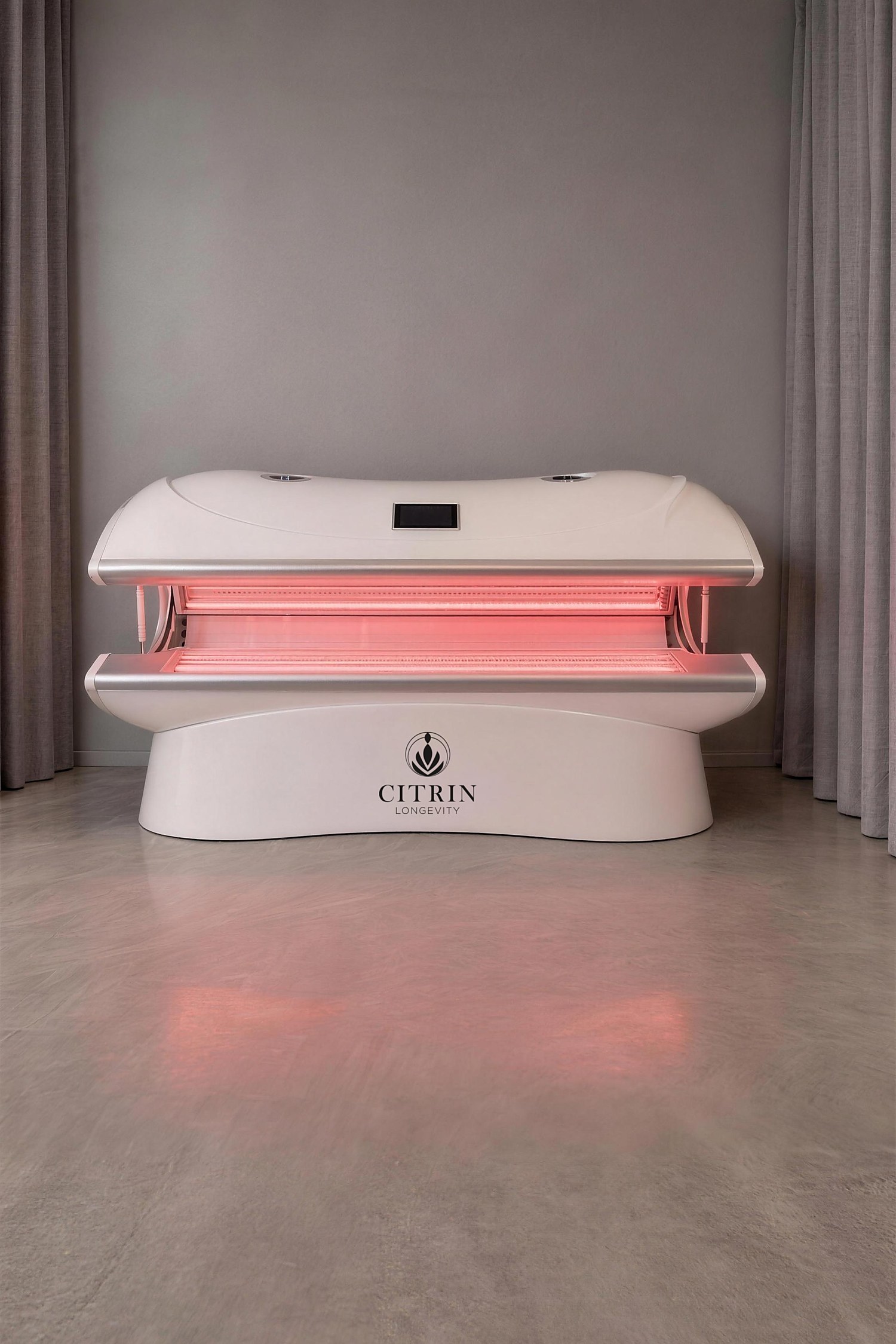
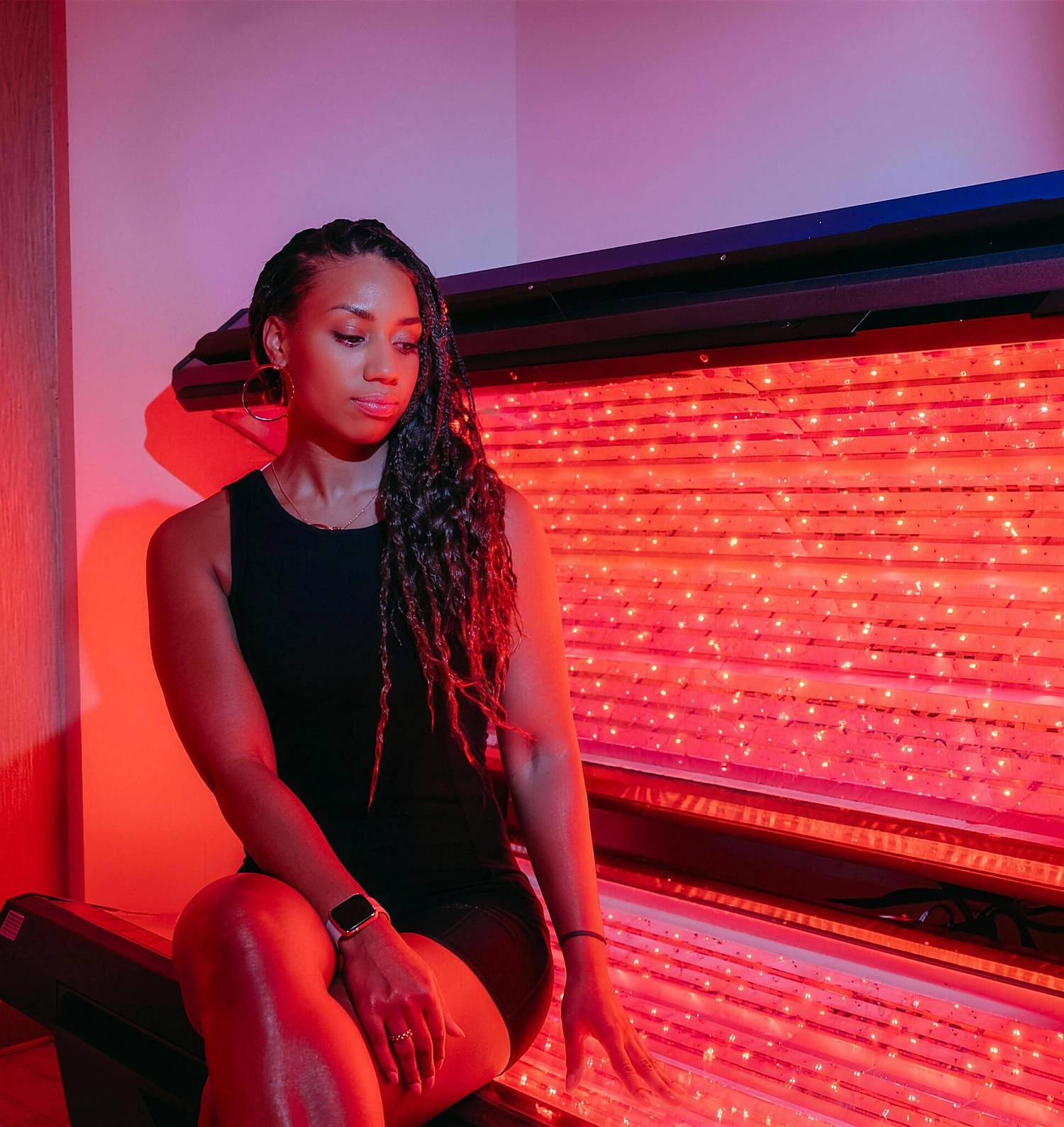
Cytochrome c oxidase, the enzyme that drives cellular energy production, responds to specific wavelengths of red and near-infrared light. When the right frequencies reach the mitochondria, ATP production increases. More ATP means more capacity for repair.
This is photobiomodulation, not an aesthetic or theoretical treatment. The same mechanism drives results across skin, muscle, joint tissue, and neurological function.
Red light at 660nm targets skin and surface tissue. Near-infrared at 850nm passes through skin and reaches muscle, joint, and neural tissue several centimeters below the surface. A single session delivers both simultaneously.
For athletes: faster clearance of exercise-induced inflammation. For patients managing chronic pain: reduced inflammatory signaling at the tissue level. For those focused on longevity: mitochondrial output that declines with age, restored.
Sessions are non-invasive, require no downtime, and are typically 15 to 20 minutes. Protocols are calibrated to your baseline inflammatory markers and wellness goals.
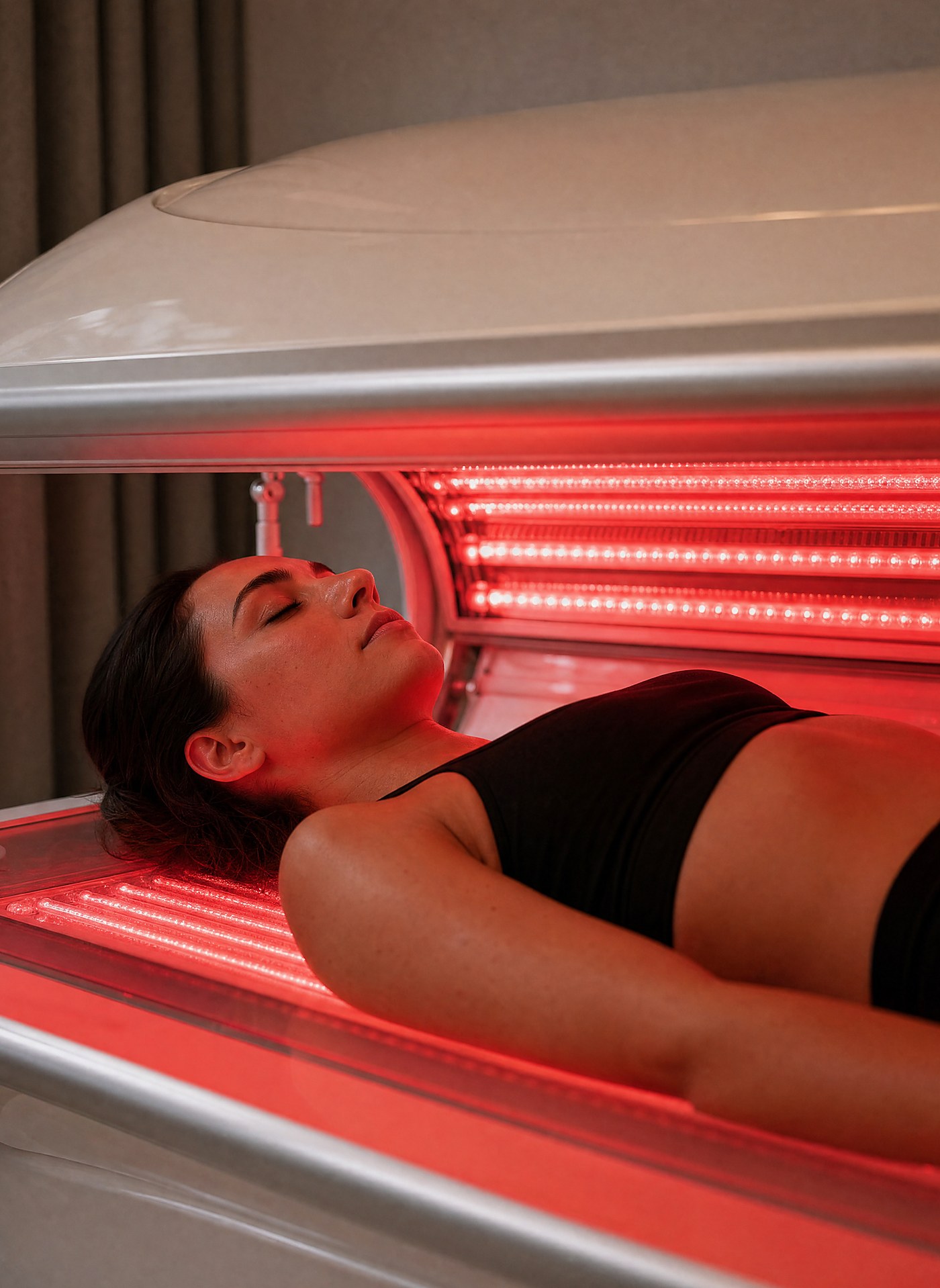
Both wavelengths are delivered in every session: red at the surface, near-infrared at depth.
We use therapeutic-grade LED and near-infrared panels, the same class of equipment used in clinical research.
Precision medicine requires a sequence. Each step creates the foundation that makes the next step meaningful.
We measure relevant inflammatory markers, mitochondrial function indicators, and the specific conditions you want to address. Red light protocols differ for athletic recovery, skin health, and chronic inflammation management.
Your ND specifies the number of weekly sessions, session duration, and any complementary therapies to stack. RLT pairs well with HBOT and IV therapy for recovery-focused patients.
Sessions are 15 to 30 minutes in a therapeutic-grade red light bed. No discomfort, no UV exposure, no recovery time. Most patients fit sessions in before or after training.
After the initial phase, we reassess the original markers. Mitochondrial function, inflammatory panels, and performance metrics are compared to baseline. The protocol continues, reduces, or evolves based on what the data shows.
How is this different from the red light devices sold online?
Both wavelength and power density decide whether red light therapy produces a therapeutic effect or a cosmetic one. Consumer devices often deliver too little irradiance per unit area to drive a meaningful cellular response, even at the correct wavelengths. Clinical panels at Citrin Longevity are calibrated to therapeutic doses within the documented range for photobiomodulation.
Is red light therapy safe for everyone?
Red light therapy is well tolerated across nearly all patient populations. The primary contraindications are active skin conditions in the treatment area and photosensitizing medications, so your ND reviews your full medication list at intake. There is no UV exposure and no thermal risk.
Can I use red light therapy on the same day as other treatments?
Yes. Red light therapy is often scheduled alongside HBOT, VASPER, and IV therapy, usually after training or after a HBOT session for recovery protocols. Your ND sets the sequencing based on your goals.
How many sessions are included in a membership?
Performance and Elevate memberships include 4 red light sessions a month, and Optimize includes 8. Sessions are also available individually as an à la carte service. Extra sessions can be added at the per-session rate.
What is the difference between the 660nm and 850nm wavelengths?
The 660nm red light works at the surface and is studied for skin tone, collagen support, and texture. The 850nm near-infrared passes deeper to reach muscle, joint, and connective tissue, which is why it is used more for recovery and inflammation. A single session at Citrin Longevity delivers both at once, so you do not have to choose.
Should I do red light therapy before or after a workout?
Both timings are studied, and your goal decides. Research suggests a session before training may support muscle readiness, while a session after may support recovery and reduce next-day soreness. Most patients at our West Hollywood center schedule red light after training, often stacked with HBOT.
Is red light therapy the same as an infrared sauna?
No. An infrared sauna uses heat to raise your core temperature and make you sweat, while red light therapy uses specific red and near-infrared wavelengths to signal the cell directly, with little to no heat. We offer both on-site in Los Angeles, and the Citrin Longevity team can advise on same-day order.
Do I need to wear eye protection during a session?
The panels are bright, so we provide eye protection and our team positions it before any face or upper-body session. If you have light sensitivity, migraines, or an eye condition, tell us at intake. Your ND reviews this and adjusts the setup so you stay comfortable throughout.
How should I prepare my skin before a red light session?
Come with clean skin when possible, since makeup, heavy lotions, and SPF can sit on the surface and block some of the light. For full-body sessions, lighter or minimal clothing lets more skin receive the wavelengths. If you use retinoids or photosensitizing products, mention them so your ND can guide timing.
How often should I come, and can I use it daily?
Many protocols use a loading phase of several sessions per week, then taper to a maintenance schedule once goals are met. Daily facial use can be reasonable at a moderate dose, but more is not always better. Your ND at Citrin Longevity sets a frequency matched to your skin, recovery needs, and markers rather than a fixed number for everyone.
How soon will I notice results?
It depends on the goal. Research suggests skin glow and reduced soreness may show in the first few weeks, while changes in fine lines and texture often build over four to twelve weeks of consistent sessions. We reassess your baseline markers so progress is measured, not guessed.
Is full-body treatment better than targeting one area?
Full-body exposure is what Citrin Longevity offers, and for most clinical goals it is the more effective approach. Photobiomodulation works where the light reaches, so delivering it across the whole body at once supports systemic outcomes a targeted device cannot replicate. If your goal is one joint or a small area, a targeted device may be enough.
Can red light therapy help with thinning hair?
Red light has been studied for certain types of hair thinning, and some research shows improved density with consistent use over several months. Results are gradual and vary from person to person. Your ND reviews your history and tells you whether red light fits your plan or works better alongside other options.
Does red light therapy cause weight loss or fat reduction?
We do not market red light as a weight-loss treatment. The strongest evidence supports skin, recovery, and inflammation, and any body-contouring claims are limited and often temporary. If your goal is body composition, the Citrin Longevity team addresses it through assessment and a broader Los Angeles longevity plan, not light alone.
Why are there red light panels inside the HBOT chambers?
Some of our hyperbaric chambers include red-light panels so you can receive pressurized oxygen and photobiomodulation in one window of time. The two are studied for complementary recovery and tissue-repair pathways. Whether stacking them suits you is a call the Citrin Longevity team makes based on your protocol and goals.
Red light is most effective with consistent use, typically several sessions per week over four to eight weeks. At Citrin Longevity it is available à la carte or within our memberships, and sessions are tracked against your baseline markers like every other modality in your protocol. Your first visit includes a full biomarker panel, body composition analysis, and a written protocol.